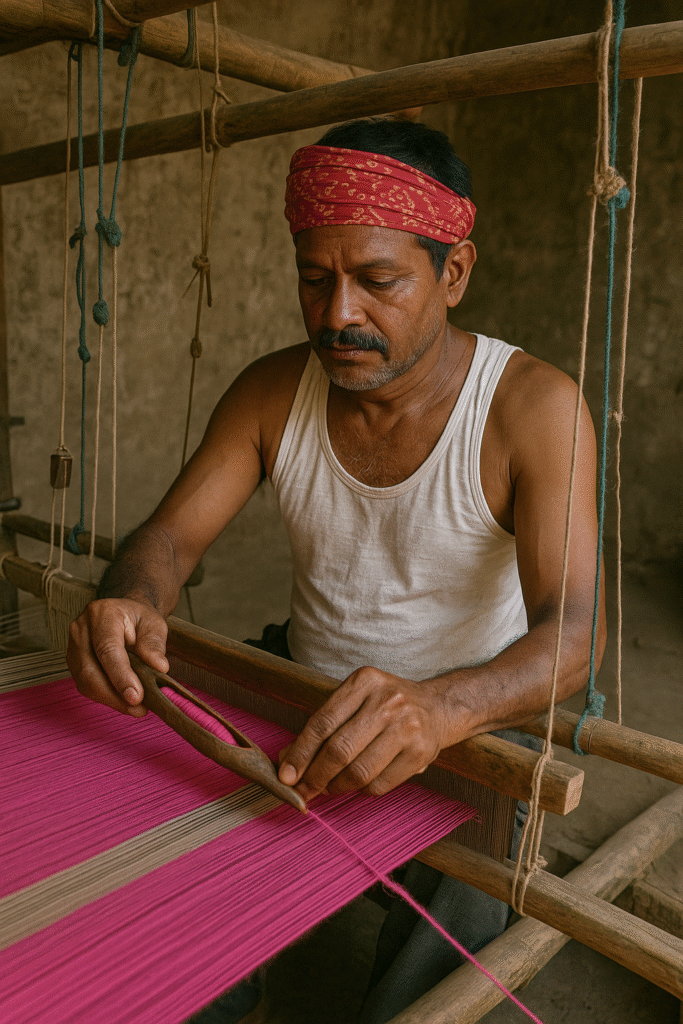
Introduction: Weaving Threads of Heritage
Gondia, known as the “Rice City of Maharashtra,” holds another treasure less spoken about—its age-old handloom weaving tradition. This craft, passed down through generations, reflects not only the skill of Gondia’s artisans but also the cultural fabric of Vidarbha. Handloom weaving here is more than just a livelihood; it is a symbol of identity, sustainability, and heritage.
The Roots of Handloom Weaving in Gondia
Weaving in Gondia traces its history back to small tribal and rural communities who crafted textiles using natural fibers like cotton and silk. Local artisans used simple pit looms to create durable, intricately designed fabrics for daily use, festive wear, and cultural rituals. Over time, these weaving techniques evolved, yet retained their traditional character.
- Regions known for weaving: Villages around Amgaon, Salekasa, and Deori tehsils host clusters of handloom artisans.
- Materials used: Cotton yarn sourced locally, plant-based dyes, and sometimes silk threads for premium weaving.
- Design influence: Tribal motifs, geometric patterns, and earthy colors inspired by the forests and rivers of Gondia.
Weaving Techniques – Tradition on the Loom

Gondia’s handloom weaving uses methods that balance simplicity and craftsmanship:
- Pit Loom Weaving: Artisans operate manually controlled pit looms to produce fine cotton fabrics.
- Natural Dyeing: Herbal and plant-based dyes are used to keep fabrics eco-friendly.
- Traditional Motifs: Borders and pallus often feature motifs inspired by tribal art, wildlife, and Gondia’s cultural symbols.
These techniques make Gondia’s handloom products unique and sustainable compared to power loom fabrics.
Cultural and Economic Significance
- Cultural Heritage: Woven textiles are a part of Gondia’s festivals, weddings, and rituals. Traditional shawls and sarees symbolize pride and craftsmanship.
- Employment: Hundreds of rural families still rely on handloom weaving as their primary source of income.
- Sustainable Fashion: With global demand for eco-friendly fabrics rising, Gondia’s handloom weaving represents a valuable opportunity to revive this craft and promote it to urban markets.
Challenges Faced by Weavers
Despite its cultural value, Gondia’s handloom industry struggles with:
- Lack of modern marketing platforms.
- Competition from cheaper power loom products.
- Insufficient government support and subsidies reaching artisans.
- Migration of younger generations to cities in search of better opportunities.
Preserving and Promoting Gondia’s Weaving Tradition
- Skill Development Programs: Workshops to teach advanced weaving methods and design trends.
- E-commerce Opportunities: Online marketplaces can help Gondia’s handloom products reach global buyers.
- Tourism Integration: Handloom villages can become cultural tourism spots where visitors watch live weaving demonstrations.
- Government Support: Schemes like Handloom Mark and GI (Geographical Indication) tagging can protect authenticity.
Conclusion: Reviving a Living Heritage
Handloom weaving in Gondia is not just a profession; it’s a cultural statement. By supporting local artisans, encouraging sustainable fashion, and integrating traditional crafts into tourism, Gondia can become a recognized hub for handloom heritage in Maharashtra. Every woven thread tells a story—of resilience, creativity, and tradition on the loom.